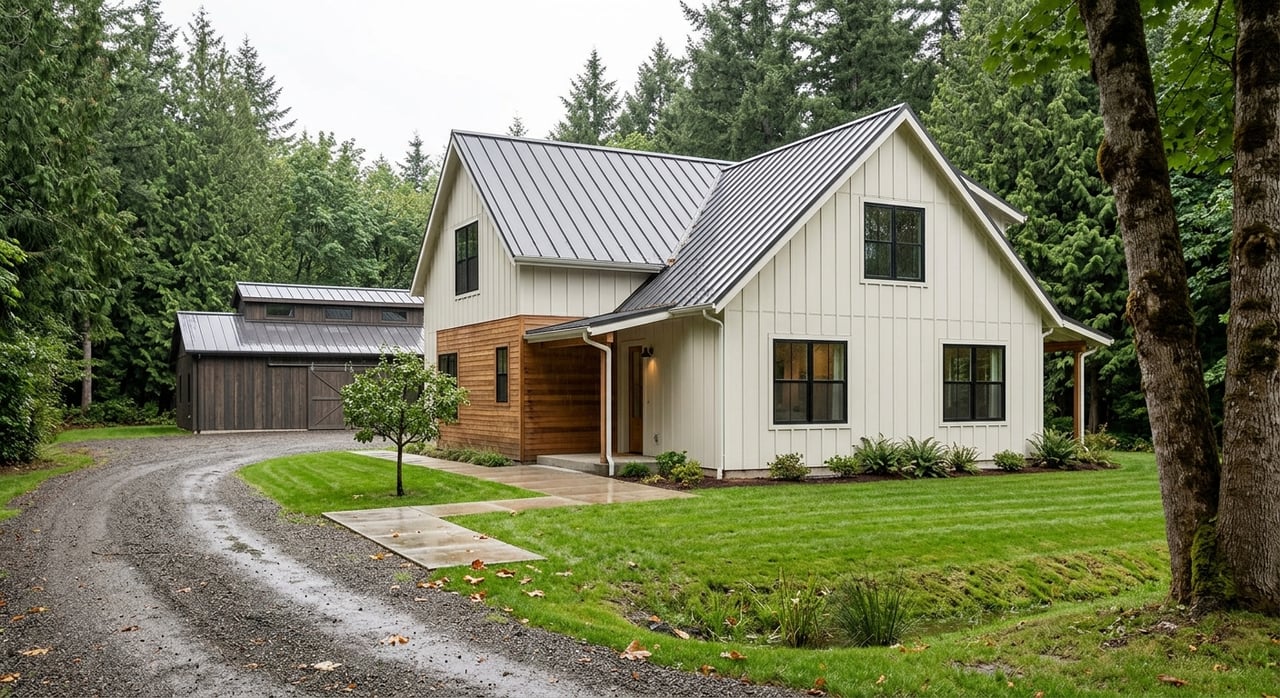
Thinking about trading a standard backyard for open space in Monroe? Acreage and hobby farm properties can offer room to garden, keep animals, build out a shop, or simply enjoy more privacy, but they also come with a very different set of rules, costs, and maintenance needs. If you are considering this kind of move, understanding zoning, utilities, access, and land constraints before you write an offer can save you time and money. Let’s dive in.
Monroe acreage market basics
Monroe is already a relatively expensive market compared with several nearby Snohomish County areas. According to Realtor.com market data for Monroe, the January 2026 median list price was $922,500, compared with Everett at $597,475, Marysville at $696,500, Lake Stevens at $757,475, Sultan at $579,990, and Snohomish at $992,475.
That matters because acreage pricing starts on top of an already higher local price point. On current Monroe land listings, prices range from under $400,000 for around five acres to nearly $2 million for larger tracts, with per-acre values varying widely depending on location, access, and development potential.
The big takeaway is simple: more acres does not always mean a higher value per acre. A smaller parcel with better access, utilities, and usable land can command a much stronger price than a larger parcel with site challenges.
City vs county rules matter
One of the first things to confirm is whether a property is inside Monroe city limits or in unincorporated Snohomish County. Monroe’s official zoning map is mostly urban in character, with residential, mixed-use, commercial, industrial, and open-space categories.
If a parcel is inside city limits, Snohomish County notes that the county zoning map will not return zoning information for that property, and you will need to work with the city that has jurisdiction. For many true acreage and hobby farm properties near Monroe, county zoning is often the more relevant framework.
Key county zones for acreage
For rural properties outside city limits, Snohomish County says the bulk matrix and use matrix control what can be built and what uses are allowed. That includes things like minimum lot area, setbacks, height, and lot coverage.
Two zones often come up in Monroe-area acreage searches:
- R-5, intended to maintain rural character in areas without urban services
- A-10, intended to protect agricultural lands and allow primarily agricultural and farm-support uses
The county’s sustainable agriculture guidance also notes that R-5 allows one dwelling unit per five acres. That can be important if you are hoping to buy land with a certain type of residential use in mind.
Hobby farm use is not automatic
Many buyers hear “acreage” and assume animals, barns, gardens, and outbuildings are automatically allowed. In practice, the exact answer depends on the parcel’s zoning, setbacks, and intended use.
Snohomish County’s agriculture guidance states that owners within 1,300 feet of designated farmlands may receive notice that they could experience normal inconveniences associated with nearby farming. It also says dwellings must be set back at least 50 feet from designated farmlands. Monroe’s 2044 planning direction also emphasizes compact urban growth, which is one reason true hobby farm use is often more of a county-rural issue than a city-center one.
Wells need real due diligence
If the property uses a private well, do not assume the water system is fine just because it is currently in use. Snohomish County and the Washington Department of Health both recommend learning as much as possible from well logs, inspections, existing records, and seller disclosures.
According to Snohomish Health District well guidance, there are no state or local well inspection requirements automatically tied to a real estate transaction, although a lender may require inspection or sampling. The same guidance recommends routine testing for coliform, nitrate, and arsenic, and the state also recommends annual testing for coliform bacteria and nitrate.
Older wells deserve extra attention. Snohomish County notes that wells dug before 1973 may not have been recorded and may be more vulnerable to contamination from surface runoff.
If you plan to keep animals or maintain a large garden, placement matters too. The county says fertilizers, pesticides, chemicals, livestock, and manure storage should be kept at least 100 feet from a well.
Septic can make or break a property
Acreage buyers in Monroe also need to understand the septic system early in the process. Washington Department of Health guidance says system failures can happen because of poor design, lack of maintenance, or simple age, and a failing system can contaminate water and reduce property value.
Snohomish County reports that more than 78,000 local homeowners rely on septic systems and offers online records and as-built information. The county encourages current inspections by licensed providers and also notes that rebates and low-interest financing may be available for repairs. You can start with Snohomish County septic resources as part of your pre-offer research.
Before you buy, it helps to know:
- Where the septic system is located
- What type of system serves the property
- When it was last inspected or pumped
- Whether there are records for repairs or replacement
- Whether future improvements could affect the drain field area
Access is more than a driveway
A beautiful parcel is much less appealing if legal access is unclear. Snohomish County states in its access requirements guide that legal access is required for any new connection from a county road.
If the parcel is served by a private road, you may need an easement. If access comes from a public road, a driveway permit may be required. This is one of those issues that can look simple on a listing sheet but become much more complex once you review title, easements, and permit history.
Land constraints can affect your plans
Not every acre is equally usable. Site prep, utility work, driveway construction, well installation, and septic installation can all trigger county review.
Snohomish County also says drainage review can consider floodplains, slopes, wetlands, streams, and even the conversion of vegetation to lawn or pasture. If a property is in a mapped flood hazard area, the county requires a flood hazard permit and elevation certificate.
Critical area rules may also apply to:
- Wetlands
- Critical recharge aquifers
- Frequently flooded areas
- Geologically hazardous areas
- Habitat conservation areas
The county also notes that landslide hazards may exist even where they are not obvious on a map. That is why raw land and acreage purchases deserve careful review well before closing.
A practical pre-offer checklist
When you are evaluating acreage or hobby farm property in Monroe, treat it as both a home purchase and a land systems project. A strong review process can help you avoid surprises after closing.
Here are some of the most important questions to investigate before making an offer:
- Is the parcel inside Monroe city limits or in unincorporated Snohomish County?
- What zoning applies, and what do the use and bulk rules allow?
- Is there legal road access, and is any easement needed?
- What do the well log, water test, and seller disclosures show?
- Where is the septic system, what type is it, and when was it last inspected?
- Are floodplain, wetland, landslide, shoreline, or slope constraints present?
- Will your intended use involve animals, a barn, a shop, or grading work that could trigger permits?
For early research, Snohomish County’s SCOPI parcel system can help surface basic parcel details such as gross acres, market value, tax code area, and aerial photos through the county’s access and parcel research tools.
Acreage ownership means ongoing management
Life on acreage often sounds simple, but the day-to-day reality is more hands-on than many buyers expect. Instead of just caring for a yard, you may be managing well testing, septic inspections, driveway upkeep, drainage, runoff, and land maintenance throughout the year.
That does not make acreage a bad fit. It just means the purchase should be approached with clear expectations. In the Monroe area, buying acreage is often as much about understanding water, septic, access, and land conditions as it is about the lifestyle itself.
Why local guidance helps
Acreage and hobby farm purchases usually involve more moving parts than a typical suburban home purchase. Zoning questions, utility records, access issues, and site constraints can all shape whether a property truly fits your goals.
If you are exploring acreage in Monroe or preparing to sell a rural property in Snohomish County, working with someone who understands the local market can help you ask better questions from the start. When you are ready to talk through your options, connect with Jenell Steltz for knowledgeable, client-focused guidance.
FAQs
What should you verify before buying acreage in Monroe?
- Confirm whether the property is in Monroe city limits or unincorporated Snohomish County, then verify zoning, allowed uses, access, well information, septic records, and any floodplain or critical-area constraints.
What zoning is common for Monroe-area acreage properties?
- Outside city limits, Snohomish County zones such as R-5 and A-10 often matter most, with R-5 intended to maintain rural character and A-10 intended to protect agricultural land and farm-support uses.
What well issues matter for Monroe acreage buyers?
- Buyers should review well logs, inspections, existing records, and seller disclosures, and test for coliform, nitrate, and arsenic, especially if the well is older.
What septic questions should you ask on a Monroe hobby farm property?
- Ask where the septic system is located, what type it is, when it was last inspected or pumped, and whether there are any repair, replacement, or as-built records on file.
What access issues can affect Monroe land purchases?
- A parcel may need legal access, a driveway permit for a county road connection, or an easement if it relies on a private road, so access should be reviewed early.
What site constraints can limit Monroe acreage use?
- Flood hazard areas, wetlands, slopes, streams, critical recharge aquifers, geologically hazardous areas, and other regulated conditions can affect where and how you build or improve the property.
What makes buying acreage in Monroe different from buying a typical house?
- Acreage purchases usually require deeper due diligence because you are evaluating the land, utilities, drainage, access, and long-term maintenance responsibilities along with the home itself.