Buying a new construction home or townhome in Bothell can feel exciting right up until the details start stacking up. One community has HOA dues, another is set up as a condo, one builder wants a larger deposit, and one address may even fall under a different county tax rate than another home across town. If you want a smoother, smarter purchase, it helps to know what to ask before you fall in love with the finishes. Let’s dive in.
Why Bothell attracts new construction buyers
Bothell stands out because it offers a mix of access, growth, and housing variety. The city is served by SR 522, SR 527, and I-405, and it is also connected by Community Transit, King County Metro, and Sound Transit. That makes it a practical option for buyers who want a newer home with access to major job centers and regional routes.
Bothell has also been planning for more housing variety. The city estimates its population at 49,550 as of April 2023 and says it has grown 19% since 2014. At the same time, the existing housing stock remains mostly low-density residential, which helps explain why townhome and middle-housing projects are such an important part of how Bothell adds homes.
The city’s housing data says about 52% of housing units are single-family homes and about 34% are apartments or other multifamily buildings with five or more units. In between those two categories, townhome-style infill can offer a middle ground for buyers who want lower maintenance than a detached house but more separation than a larger apartment building.
Why location within Bothell matters
Not every new-build experience in Bothell feels the same. Downtown Bothell has a more connected street grid, sidewalks, and shorter blocks, while areas outside downtown tend to be more suburban and auto-oriented due to disconnected streets and topography.
That means the exact subarea can shape your daily life more than the builder brochure suggests. A downtown-adjacent townhome may offer a different feel, access pattern, and neighborhood layout than a project farther from the core. When you compare communities, look beyond the home itself and think about how the surrounding street network works for your routine.
What a Bothell townhome usually looks like
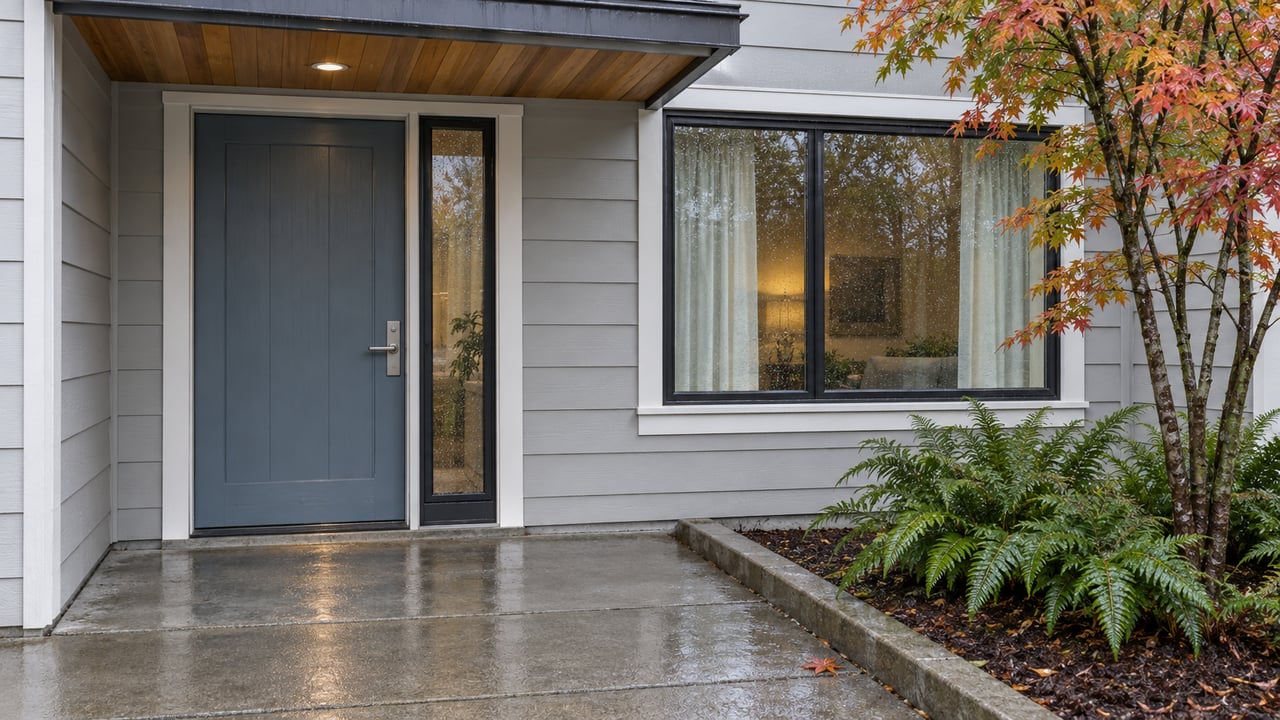
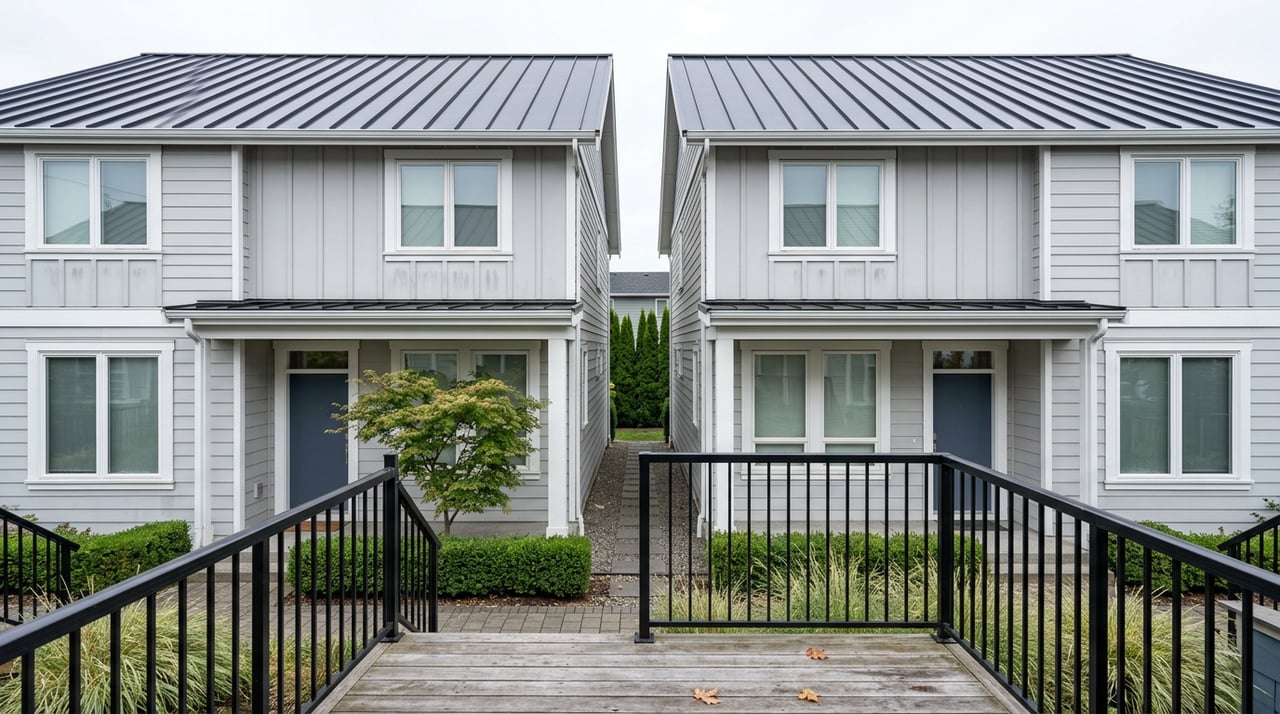
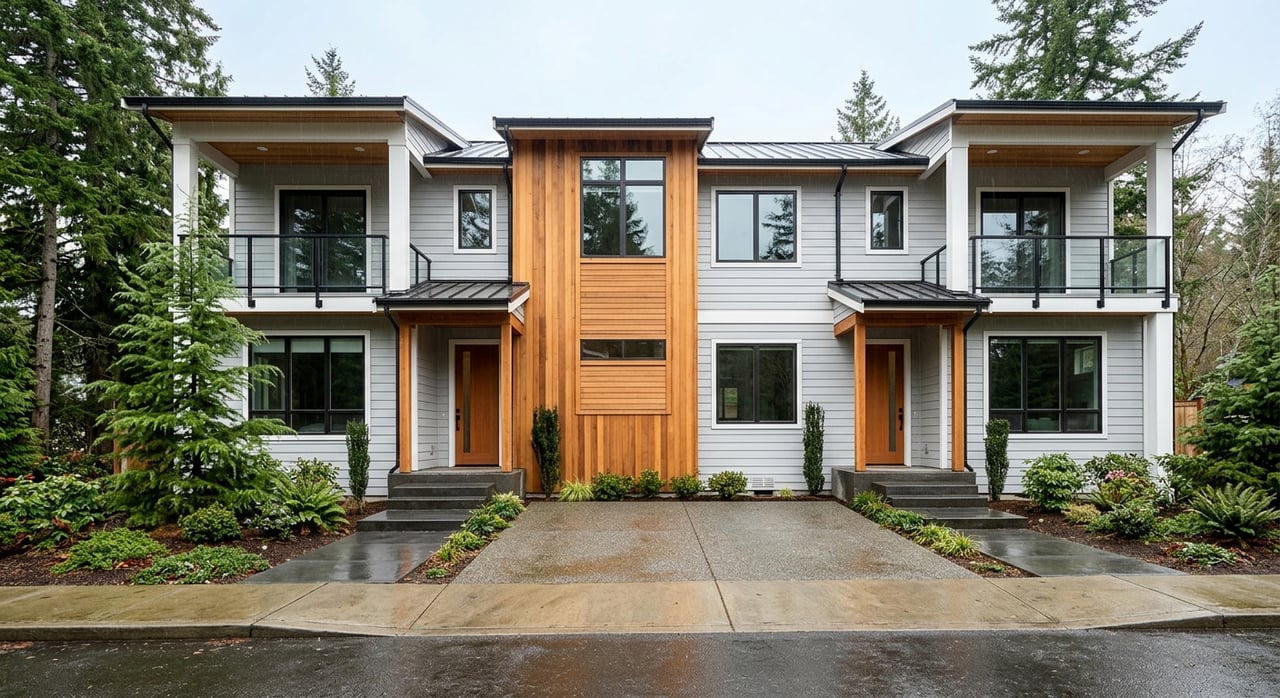
In Bothell, townhomes are generally side-by-side attached homes with individual entrances and multiple stories. The city describes them as attached units, and the municipal code applies the residential code to townhouses that are not more than three stories above grade plane and have separate means of egress.
In real life, that often means a more compact footprint and a vertical layout. Instead of a detached-home floor plan spread across one or two broad levels, you may see living spaces on one floor, bedrooms on another, and entry or garage space on the lower level. Shared walls are part of the product type, so the main tradeoff is often lower exterior maintenance in exchange for less separation than a detached home.
Condo or HOA townhome matters more than you think
One of the biggest questions you can ask is whether the home is legally a condominium or an HOA townhome. Buyers often focus first on price, finishes, and layout, but the legal structure of the community can affect disclosures, dues, maintenance obligations, and even how you review the documents before closing.
Washington’s Office of Regulatory Innovation and Assistance explains that townhomes may be organized either as HOAs or as condominiums. It also notes that common-interest communities are privately managed through CC&Rs, bylaws, and mandatory assessments. In other words, you are not just buying the home itself. You are also buying into a system of rules, budgets, responsibilities, and shared decision-making.
What HOA dues may actually cover
Monthly dues are easy to underestimate when you are comparing payment scenarios. In many common-interest communities, those dues may help cover shared streets, lighting, sewers, retention ponds, garages, landscaping, insurance, software, and vendor services.
That is why the right question is not simply, “How much are the dues?” It is, “What do the dues cover, and what do they not cover?” A higher monthly number may come with more shared maintenance, while a lower one may leave more responsibility with individual owners.
Why reserves deserve a close look
A beautiful new community can still have budget issues later if reserve planning is weak. Under Washington law, associations with significant assets are generally expected to prepare and update reserve studies annually, with a visual-inspection update at least every three years.
Reserve studies are meant to help communities plan for major maintenance and replacement costs that do not fit neatly into the annual operating budget. If reserves are thin, future special assessments become a more real possibility. For you as a buyer, that makes reserve health just as important as countertops or appliance packages.
What condo disclosures can tell you
If the community is a condominium, Washington requires a resale certificate before sale or conveyance. That certificate must disclose items such as common assessments, unpaid assessments, special assessments, and the status of the reserve study.
This is important because the certificate can reveal whether the community is on solid financial footing or whether there may be warning signs. If the certificate states there is no current reserve study, it must also warn the buyer about the risk of special assessments. That is a strong reason to review the documents carefully before you move forward.
Why governing documents matter now
As of 2026, buyers should still expect older condo and HOA statutes to apply in many cases, but Washington is moving toward RCW 64.90 for common interest communities. ORIA says certain legacy statutes are scheduled to be repealed on January 1, 2028.
For a buyer today, the practical takeaway is simple. Ask which statute governs the specific community, and read the recorded CC&Rs, bylaws, budget, reserve study, and rules before writing an offer. That extra review can help you understand how the community functions long before you own in it.
Why Bothell new-build timelines can shift
Many buyers assume new construction comes with a clean, predictable calendar. In reality, builder timelines can be slower and less certain than resale timelines because there are more moving parts behind the scenes.
Bothell’s permit center says new-building permit fees are based on square footage and construction type, and the city’s design standards require a preconstruction meeting before any developer work starts. Developers must already have approved plans, required city permits, and any outside-agency permits or easements in place before that meeting. The city also requires inspections before work is covered and before final acceptance, which helps explain why closing dates can move if utilities, easements, or inspections take longer than expected.
How to think about deposits and contingencies
For a home that is not yet complete, the builder may ask for upfront earnest money. That makes it especially important to ask under what conditions the deposit is refundable.
You should also understand which contingencies are allowed and how long the inspection window lasts. A contingency can give you a path out of the contract if financing does not work out or if the inspection uncovers serious issues. Those terms are worth reviewing early, before you get too far into the process.
Why an inspection still matters on a new home
It is easy to assume a brand-new home should not need much scrutiny. But a new home and a flawless home are not the same thing.
An independent inspection can help you identify issues that may need attention before or after closing. It is also important to remember that an appraisal and an inspection do different jobs. One is for value and lending, while the other is for condition and defects.
What to ask about builder warranties
Most new homes come with some type of builder warranty. The Federal Trade Commission says many builder warranties commonly provide about one year of workmanship and materials coverage, two years for systems like HVAC, plumbing, and electrical, and in some cases 10 years for major structural defects.
That said, you should still ask for the exact warranty terms that apply to the home you are buying. Pay close attention to exclusions, claim procedures, and whether the warranty is a builder warranty or a separate paid home-warranty service contract. Those are not the same thing.
Don’t overlook county tax differences
Bothell spans both King County and Snohomish County, and that can affect property taxes. The city says properties inside Bothell pay either King County or Snohomish County tax rates depending on location.
That means two townhomes with a Bothell address can still have different county-level tax bills. Before you write an offer, verify which county the parcel is in so you can budget more accurately.
Smart questions before you write an offer
When you are comparing Bothell new construction and townhomes, these are some of the most useful questions to ask:
- Is this home legally a condo or an HOA townhome?
- What do the monthly dues cover?
- Is there a current reserve study?
- Are any special assessments being discussed?
- What is the builder deposit, and when is it refundable?
- Which contingencies are allowed?
- How long is the inspection window?
- What is included in the base price versus upgrades?
- Which county is the parcel in for tax purposes?
- What warranty coverage applies after closing?
These questions help you look past model-home presentation and focus on the issues that can shape your costs, flexibility, and long-term comfort with the purchase.
The best way to buy with confidence
A Bothell townhome or new construction home can be a great fit if you want newer finishes, lower exterior maintenance, and a more streamlined lifestyle. But the smartest buyers look beyond surface appeal and study the structure of the deal, the community documents, the timeline, and the monthly ownership costs.
That is where experienced representation can make a real difference. If you want help comparing communities, reviewing the right questions, and navigating the details of a Bothell new-build purchase, connect with Jenell Steltz for practical, local guidance.
FAQs
What should you ask before buying a new construction townhome in Bothell?
- Ask whether the home is a condo or HOA townhome, what the dues cover, whether there is a current reserve study, whether special assessments are being discussed, what the deposit terms are, which contingencies are allowed, what is included in the base price, which county the parcel is in, and what warranty applies.
Why do HOA reserves matter for Bothell townhome buyers?
- Reserve studies help associations plan for major repair and replacement costs, and if reserves are weak, owners may face future special assessments.
How can Bothell location affect a new construction purchase?
- Downtown-adjacent areas may offer a more connected street layout with sidewalks and shorter blocks, while other parts of Bothell may feel more suburban and auto-oriented.
Why can Bothell new construction closing dates change?
- Closing dates can shift because developers may still be working through permits, easements, utilities, required inspections, and final city acceptance.
Do Bothell townhomes always have the same property tax rate?
- No. Because Bothell includes areas in both King County and Snohomish County, two homes with a Bothell address can have different county-level tax bills.